Book Review – Illuminae

Title: Illuminae: The Illuminae Flies _01
Author: Amie Kaufman & Jay Kristoff
Published: January 2015
Genre: Young Adult Sci-Fi/Fantasy

Rating: 5 Stars
Cover: Like it
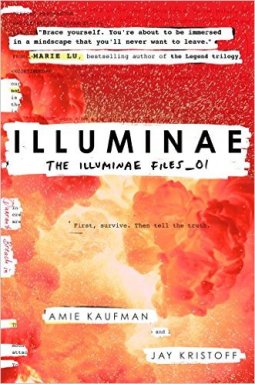
51vpagsvayl-_sx329_bo1204203200_Synopsis:

This morning, Kady thought breaking up with Ezra was the hardest thing she’d have to do today. This afternoon, her planet was invaded.

The year is 2575, and two rival mega-corporations are at war over a planet that’s little more than an ice-covered speck at the edge of the universe. Too bad nobody thought to warn the people living on it. With enemy fire raining down on them, exes Kady and Ezra—who are barely even talking to each other—are forced to fight their way onto the evacuating fleet, with an enemy warship in hot pursuit.

But the warship is the least of their problems. A deadly plague bas broken out and is mutating, with terrifying results. The fleet’s AI, which should be protecting them, may actually be their enemy; and nobody in charge will say what the fuck is going on. As Kady hacks into a tangled web of data to find the truth, it’s clear only one person can help her bring it all to light: the ex-boyfriend she swore she’d never speak to again.

Briefing note: Told through a fascinating dossier of hacked documents—including emails, schematics, military files, IMs, medical reports, interviews, and more—Illuminae is the first book in a heart-stopping, high-octane trilogy about lives interrupted, the price of truth, and the courage of everyday heroes.

This is my first read by either of these authors, though I have the beautiful UK edition of Nevernight by Jay Kristoff on my shelf to read and I’ve already preordered the second book in the Illuminae series. After finishing this book, I will keep an even closer eye on these authors and their work.

Illuminae is the most engaging book I’ve read in a while. I thoroughly enjoyed the formatting of the text, using files, footage, and communications between ships. It felt like I was reading a real case file on an incident. Black pages are used for Kady’s diary entries and for the Artificial Intelligence’s, AIDIN, readings. Words dance across the pages in twists to illustrate the Cyclone ships flight paths, or to create a picture of the ships at war. Some words break to pieces to show a life lost during battle. I took extra long to read each page as the digital aspects through the illustrations mesmerized me, completely engaging me in the plot line. My only frustration with the format of the book was that I was constantly leaving fingerprint smudges on the black pages. When I complained about this to my boyfriend, he told me I should just buy two copies of every book—one to read and one to stay pretty looking. A girl can dream, can’t she?

Disclaimer as I move into the plot: PEOPLE DIE. So many people die. Three ships are able to escape the Kerenza colony when it is attacked by Bio-Tech. Though the ships suffer damages from the battle, they are able to save thousands of civilians and make headway as they escape the only Bio-Tech ship left standing, Lincoln. Before long, however, they are faced with troubles among their own fleet, including a plague that causes severe paranoia and their AI—which is programmed to protect them—suddenly and inexplicably killing their own people. The violence is not for the faint of heart. The hardest death for me in the whole book was the hardest one for Kady. I could almost hear the sound of my heart breaking and sinking into my stomach.

Kady is one of my favorite characters I’ve read. She is determined, feisty, and refuses to sit down and do nothing. Even AIDIN is charmed by her: “She tosses lank hair from her eyes. Eyes narrowed to knife cuts. Refusing to kneel. To break. To fall. I can see why they loved her” (p 548). She will not let the truth be hidden, but instead fights for knowledge through hacking into documents and even escaping one ship to help another. While rule-breaking never should be encouraged, Kady’s spunk and struggle for the truth to be known universally is admirable. We need more women like her in America today.

While Kady is primarily preoccupied in her illegal hunt, a part of her is preoccupied with her relationship with her ex-boyfriend, Ezra. The morning before their home was invaded, she had broken up with him, much to his dismay. However, since he is on a separate ship than her, he has access to information she needs. She finally breaks the silence and starts to work with him. It is apparent he is still smitten by her when he continues to send her cheesy love poems in the shape of hearts and roses (insert eye roll) and tells her sweet encouragements like this (insert melting of my heart):

“Mason, E, LT 2nd: you have me
Mason, E, LT 2nd: until the last star in the galaxy dies
Mason, E, LT 2nd: you have me” (p 232).

While their relationship does not take up the whole plot line, it plays a big part. It’s encouraging to see people fight for each other in the midst of chaos, and to chose to work out their issues instead of ultimately running away.

The amount of twists revealed in Illuminae are innumerable. I constantly found myself gasping in shock at new information or even the shear brutality of everything. This book is well advertised by the line “Am I not merciful?” (p 307), but once I actually got to that part, I was completely horrified by what it meant. Once again, this book is not for the faint of heart. Every twist and turn provided more shocks, more horror, and hope was constantly handed to me and then ripped away. This book was so engaging, I’d think about it even when I wasn’t reading it. It is gripping and perfectly descriptive. I am counting down the days until book #2 hits the shelves.
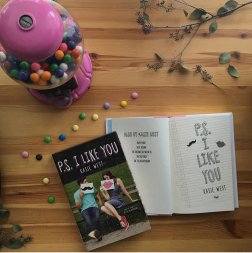
Book Review – P.S. I Like You

img_9247
Title:
P.S. I Like You
Author: Kasie West
Published: July 2016
Genre: Young Adult, Contemporary Romance

Rating: 3 Stars
Cover: Hate it

Synopsis:

Signed, sealed, delivered…

While spacing out in chemistry class, Lily scribbles some of her favorite song lyrics onto her desk. The next day, she finds that someone has continued the lyrics on the desk, and added a message to her. Intrigue!

Soon, Lily and her anonymous pen pal are exchanging full-on letters—sharing secrets, recommending bands, and opening up to each other. Lily realizes she’s kind of falling for this letter writer. Only, who is he? As Lily attempts to unravel the mystery and juggle school, friends, crushes, and her crazy family, she discovers that matters of the heart can’t always be spelled out…

Kasie West brings irresistible wit, warmth, and sparkle to this swoon-worthy story of love showing up when—and where—you least expect it.

**Disclaimer: My brother (who is an artist) and I decide together what to rate the covers. The star rating is completely my own. If you have any questions about why I rated the way I did, feel free to comment below or email me: rebecca.june.moore (@) gmail (.) com.**

Stories about people falling in love are not new. Just look at the movie You’ve Got Mail (1998), and the Broadway musical She Loves Me, both of which were adapted from a play called Parfumerie. As soon as Lily finds that someone has returned the lyrics on the desk, I knew what the ending would be. When Lily starts thinking through who her pen pal could be, I was able to figure it out right away. If you are looking for something unpredictable to keep you on your toes, this book is not for you.

P.S. I Like You is perfect for a light, quick read to soften your cold, dead heart. Halfway through the book, Lily finds out who her pen pal is, and she is conflicted with this discovery. He is someone she has written off as shallow and rude. There’s no way in her mind that he could be the sensitive guy from a broken home with great taste in music. The letters she receives from him show a side he hides from those around him. Lily starts to understand his past and his present, and how it shapes him. She understands why he’s responded in certain ways, realizing that his actions were less rude and more coping. He shows her his desire to teach kids and to make people feel comfortable. This is the side that causes Lily to let go of her grudges and fall in love.

I love stories that teach people that there’s more to others’ stories than what meets the eye. The most interesting thing about this story is the way Lily wrestles with what she thinks she knows about this guy and what she learns of him through their letters. Through this experience, Lily herself changes and learns to be slower to making judgments in her other relationships. Any book with character growth is a step in the right direction.

As I said, Kasie West, while sometimes a little over descriptive, retells a common story with a nice twist. Her characters are quirky, funny, and relatable. The awkwardness that Lily’s character deals with in her family and an uncomfortable blind date is almost too real. It made me remember the feelings at the beginning of my relationship and the excitement that someone could feel the same way. The writing is engaging – I couldn’t put it down, staying up until 2:30 in the morning to finish it. P.S. I Like You is great for an easy, quick, feel-good read.

Book Review – Norwegian Wood

IMG_8288Title: Norwegian Wood
Author: Haruki Murakami
Published: 1987
Genre: Bildungsroman

Rating: 4 Stars
Cover: Like It

I found myself sitting still for a while after I finished this book, enveloped in the peculiar sadness you feel when you think about someone who used to be a big part of your life. The character, Toru Watanabe, adds to this feeling when he says, “People leave strange little memories of themselves behind when they die” (p. 197).

Haruki Murakami is well known for the magical realism elements in his stories. It’s interesting to me that the first book I picked up by him instead tells the story straight. I will be interested to see what my opinion of Murakami will be once I read some of his other books. Magical realism is very dear to my heart.

The descriptions in Norwegian Wood captured me right away and I felt as if I were walking alongside the characters, taking in the scenery as described and feeling the sometimes confusing emotions as the characters try to explain themselves to each other. When the book starts, the reader is introduced to the main character, Toru, who almost instantly takes us back into his memories of his college years. From the way he’s wrestling with his memories, the reader should be prepared for some difficult things as he sorts through them. Difficult indeed. I found myself cringing as one character tells him about how a 13-year-old girl raped her (an extremely detailed and uncomfortable scene), or getting frustrated as characters seem to push and tug Toru however they see fit.

One character that plays a large role in Toru’s college years is Naoko. A friend of his from high school, they both come together over the equal confusion and hurt over a mutual friend’s death. Naoko has a tough time, though, as this person is one whom she has loved and spent almost every waking moment with since a young age. She struggles to learn who she is and how to live without being a joint person.

I find Naoko’s character fascinating. Murakami does such a good job showing Naoko’s internal struggles and poor mental health from an outsider’s perspective. Throughout most of the book, she is a confusing character and quite strange – I had trouble as to what to make of her. However, by the end, I realized that this was masterfully handled to show the perspective of one who loves another who struggles with their mental health, and feeling unable to completely understand or connect with that person.

One thing I find very strange in this story is that all of the female characters are equal parts self-deprecating and pushers. They each come into Toru’s life, instead of he into theirs, decide they are going to make him be friends with them by sweeping him up into their lives, and have long conversations about themselves that usually end with, “Don’t you feel sorry for me?” Each of these characters is so wrapped up in their own worlds and drag Toru along, without a care as to how he’s affected. Poor Toru just goes with the flow, his only friends being those who have sought him out, and sometimes gets trampled on in the process. While his friends or romantic interests ask him questions about himself and praise how unique he is, their ultimate goal in everything they do seems to benefit their own little worlds, instead of him. I was very discouraged by this throughout the book because they all seemed to be extremely unhappy with their lives, leaving Toru depressed in their dust. I can only hope the poor guy learned how to make healthier relationships after this season in his life.

Norwegian Wood was a beautiful, confusing, and stressful adventure. The writing itself is almost poetic at times and is rightfully praised. It deals with heavy issues, sex-crazed college students, and a heart of pure gold. This book is the title that sent Haruki Murakami into fame and stardom, which makes me wonder how his books written before and after read.

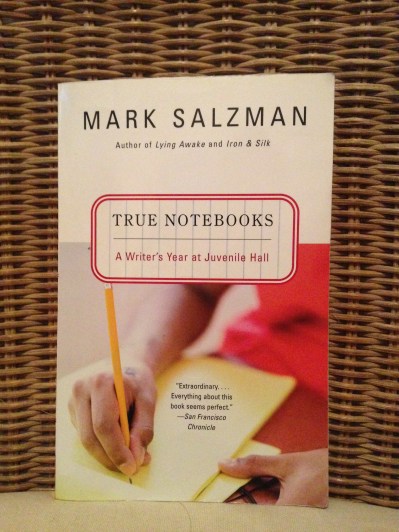
Book Review – True Notebooks

IMG_7875Title: True Notebooks: A Writer’s Year at Juvenile Hall
Author: Mark Salzman
Published: 2003
Genre: Sociology

I finished this book while riding the subway to my internship in New York City. It took every ounce of self-control to reign in the tears threatening to overflow. Why? I’ll tell you.

Mark Salzman writes about on opportunity he had in 1997 and how it affected his life. He was stumped while working on a novel and wanted to get some insight on the life and character of a juvenile delinquent. Somewhat reluctantly, he started volunteering in L.A.’s Central Juvenile Hall as a writing teacher for teenagers charged with murder and other violent crimes. He had all these expectations of what to expect from these boys. I’m sure all of us do. That’s not a situation most of us would desire to find ourselves. Some of these stereotypes seemed to be well-labeled at first, but then…Through their writing, the boys found their voice and began exploring their experiences, their emotions, their thoughts. Many wrote about how it feels to be locked up, awaiting their court date, knowing the eventual outcome–often a life sentence in prison. Through this experience, they struggle to understand their lives now that these mistakes they’ve made define them.

A few of the boys stayed in the class for most of the book, but one of the hardest things was reading about boy after boy who came into the class, found hope in their self-expression and a positive role model in their teacher, and would suddenly, unexpectedly leave, being sent to spend a lengthy amount of years in prison. Salzman’s writing connects the reader with all the characters, no matter how vulgar or what they had done. They weren’t criminals in my mind. They were humans with passions, thoughts, creativity, longing, and personalities. Salzman humanizes the convicts and calls the reader to allow them in your heart.

One of the biggest themes the boys strive to work through in the book is their struggle with hopelessness. What would they do with their lives if they had done it differently, if they had had another chance? Some find hope everywhere they can, like being able to see a cloud out of their small window. Some are unable to find hope at all.

The reader learns about the culture of the boys and why they feel they need to do the things they do or why they wish they hadn’t done what they did. We learn about how gangs run and influence their lives and about how they believe they must be strong for their families. One boy explains that, when they go to court, they have to wait to cry until they leave because they don’t want that image to be the last version of them their families see. He wrote a long piece about his experience in court, how he was unable to stay strong, and one passage in particular hit me in the gut:

I thought about all the people that were sitting in the courtroom giving me their support and love and I lost complete control of my emotions. The tears that I had held in for so long streamed down my face as I cursed myself for letting these people down. Why couldn’t the judge see that the young man sitting before her was not the same person that had entered juvenile hall two years ago? Why couldn’t she see that I had dreams of getting out and getting my life together, to be somebody?
p. 207

This book caused me to feel a wide range of emotions and feel completely connected. Salzman’s writing is uncensored and raw. He gives a real look at what life is like for these boys while in juvie, and what their lives look like after. By including the writing from all the boys he was able to teach, he allows us to feel for the characters as if they were people in our own lives who made mistakes. He makes us feel hope, fear, sadness, anger, and joy with each of the characters. The boys all discover more about themselves and their world through their writing. My only wish is that they could’ve had an experience like this before they made the choices they did. My only hope is that others can experience the therapeutic aspects to writing their hearts.

Now you know what happened. Now you know my story.
I hope I’m not just a face for you to see.
I’m a person with a past. I’m a person with a future.
So if I may, can I ask you to please pray for me?
p. 68